
Abiotic and Biotic Influences on Current and Historic Distributions of Oyster Reefs
Principal Investigators: Marc Slattery, Greg Easson, Deborah Gochfeld, Stephanie Showalter Otts, Kristie Willett
Graduate Students: Jarett Bell (MS Student), James Gledhill (MS Student), Ann Fairly Barnett (MS Student)
Additional Project Participants: Shawn Prychitko (Bay-Waveland Garden Club), John Gibson (Hancock County Historical Society), Eddie Coleman (Hancock County Historical Society), Johnathan Harris (University of Mississippi), Thomas Mohrman (The Nature Conservancy)
Award Amount: $625,000
Project Description
Goal:
Identify differences in abiotic and biotic stressors at current and historic oyster reef sites, to better understand oyster reef health and to inform management regarding the best places and practices to improve oyster reef restoration strategies
Why it is Important:
In recent years there has been a global decline of oyster populations and concurrent losses to coastal economies and associated ecosystem services.
This is particularly apparent along the Mississippi Gulf Coast where oyster landings have declined ~15-fold over the past decade. The State of Mississippi has committed to an oyster reef restoration strategy that will facilitate sustainable landings of one million sacks per year by 2025.
As the State of Mississippi implements the Governor’s Oyster Restoration and Resiliency Council (GORRC) plan, the results of this project will provide crucial knowledge related to acceptable sites for future oyster reefs that will support sustainable and productive oyster fisheries in the region. These data will inform local resource managers as they restore and/or remediate these critical ecosystems for future generations.
Objectives:
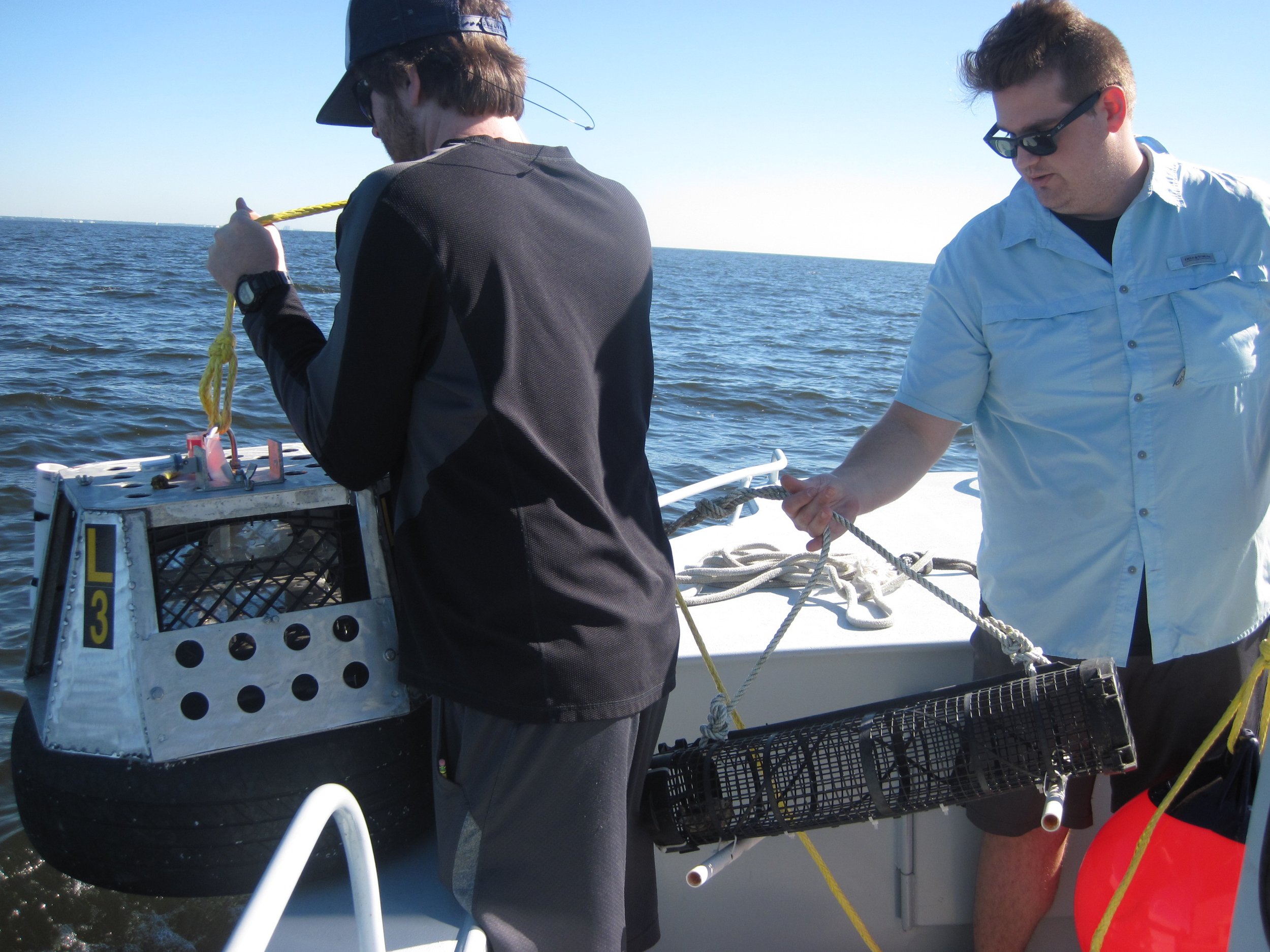
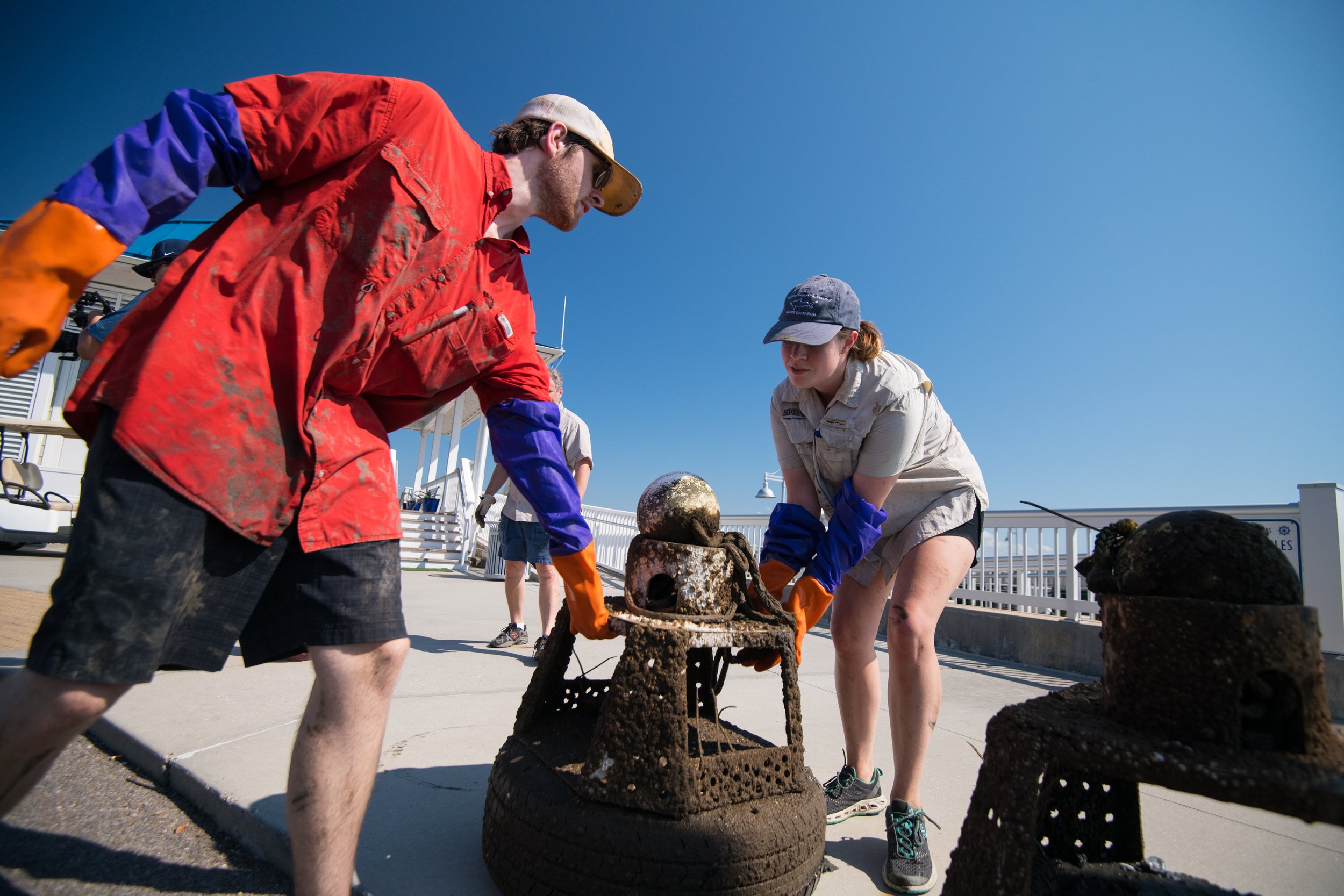
Develop and deploy replicate Oyster Sensor Platforms to current and historic oyster reefs
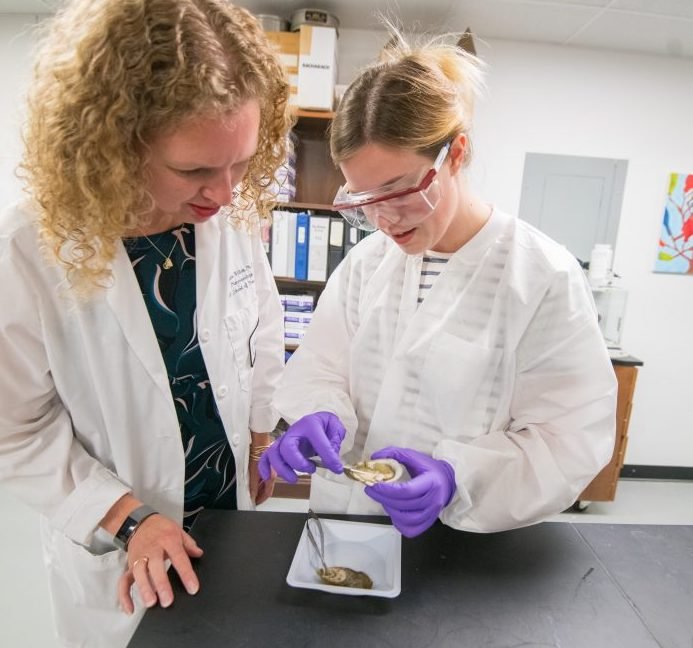
Characterize the biochemical and physiological responses of oysters to natural and anthropogenic stressors at these sites
Assess the ecological and environmental impacts of stress on oyster reefs
Accomplishments:
Oyster Sensor Platforms were deployed at multiple current and historic reef sites in Mississippi Sound for a period of 1-3 months, beginning in April 2018.
Platforms measured water quality and bio-accumulated contaminants
Water quality metrics: temperature, salinity, dissolved oxygen, and pH
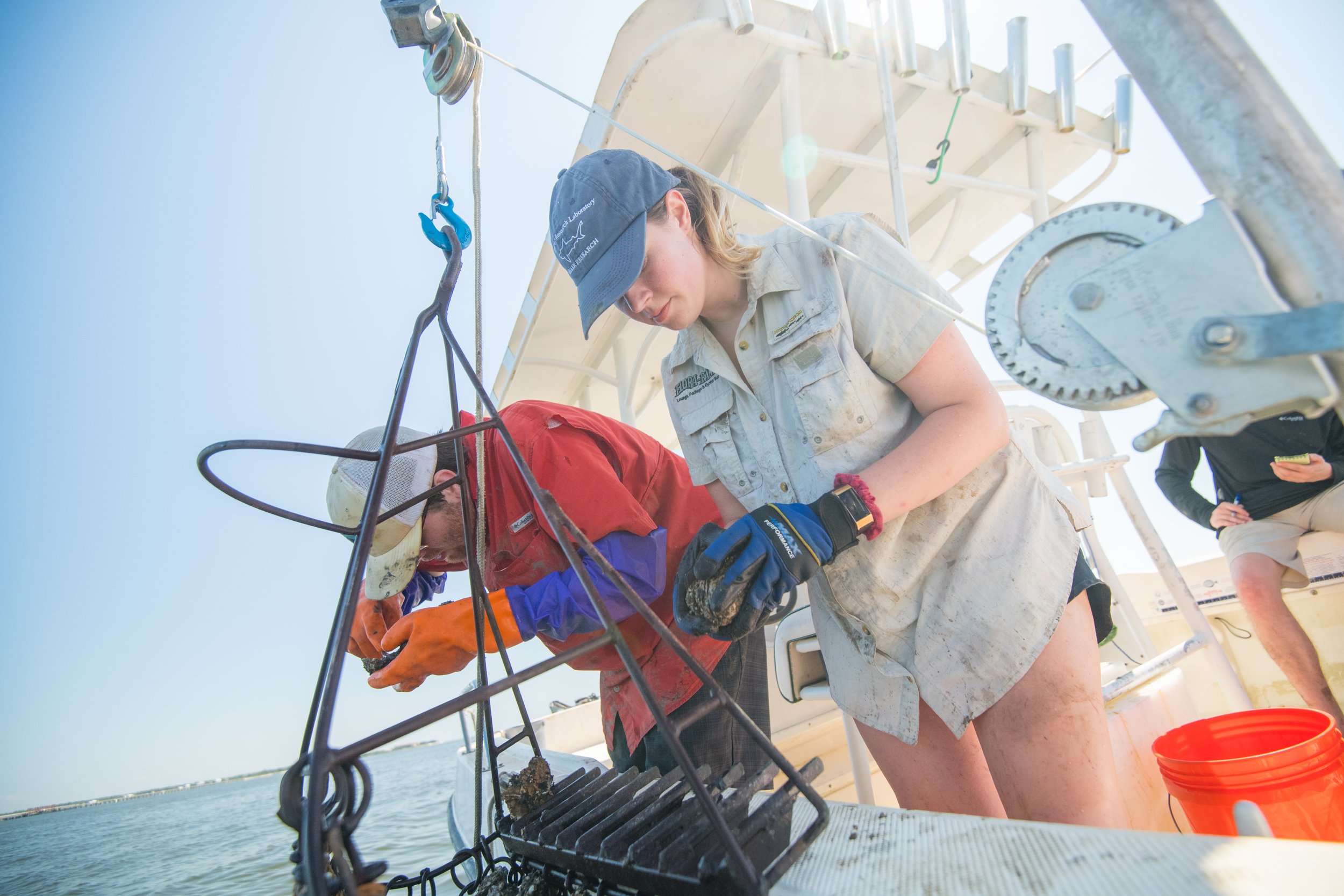
Bio-contaminants: ~30 adult oysters were affixed to each platform to act as biosensors of water quality. At the end of each deployment, oysters were collected for laboratory tissue processing to measure tissue toxin and pathogen bioaccumulation.
Ecological differences (distribution, abundance, and biodiversity) between current and historic oyster reefs were quantified to identify oyster population and oyster reef ecosystem responses to environmental stressors.
Project Outputs
-
Barnett AF, Gledhill JH, Griffitt RJ, Slattery M, Gochfeld DJ, Willett KL. 2020. Combined and independent effects of hypoxia and tributyltin on mRNA expression and physiology of the Eastern oyster (Crassostrea virginica) Scientific Reports 10: 10605. Link.
Gledhill J, Barnett AF, Slattery M, Willett KL, Easson G, Showalter Otts S, Gochfeld DJ. 2020. Mass mortality of Eastern Oyster Crassostrea virginica in the western Mississippi Sound following unprecedented Mississippi River flooding in 2019. Journal of Shellfish Research 39:235-244. Link.
-
Barnett AF, Gledhill J, Scircle A, “Microplastic pollution, Mississippi River flooding, importance of oyster reefs”, 8th Grade Environmental Engineering Course, Oxford Middle School, Oxford, Mississippi, December 13, 2019
Barnett AF, Gledhill J, Willett KL, Slattery M, Griffitt RJ, Gochfeld DJ, “The interactive and independent effects of TBT and hypoxia on the oyster, Crassostrea virginica”, Coastal and Estuarine Research Federation 25th Biennial Conference, Mobile, Alabama, November 3-7, 2019
Gledhill JH, Barnett AF, Gochfeld DJ, Slattery M, Easson GL, Willett KL, “Effects of a chronic freshwater inflow event on oyster reefs in the Mississippi Sound”, Coastal and Estuarian Research Federation, Mobile, Alabama, November 3-7, 2019
Gledhill J, Barnett AF, Gochfeld DJ, Griffitt RJ, Slattery M, “Stress responses in Eastern oyster (Crassostrea virginica) exposed to hypoxic conditions”, 20th Pollutant Responses in Marine Organisms, Charleston, South Carolina, May 19-22, 2019
Slattery M, Easson GL, Gochfeld DJ, Willett KJ, Otts S, Gledhill J, Barnett AF, Bell J, “Researching the health of oyster reefs in Mississippi”, General Public, April 9, 2019
Barnett AF, Gledhill J, Willett KL, Slattery M, Griffitt RJ, Willett KL, “The interactive and independent effects of TBT and hypoxia on the oyster, Crassostrea virginica”, Mississippi Academy of Sciences 83rd Annual Meeting, Hattiesburg, Mississippi, February 21-22, 2019
Gledhill JH, Barnett AF, Bell J, Griffitt RJ, Gochfeld DJ, Willett KL, Easson G, Showalter-Otts S, Slattery M, “Gene expression analysis of the Eastern oyster (Crassostrea virginica) during and following exposure to hypoxia”, Mississippi Academy of Science meeting, Hattiesburg, Mississippi, February 21-22, 2019
Barnett AF, Gledhill J, Willett KL, Slattery M, Griffitt RJ, Gochfeld DJ, “The interactive and independent effects of TBT and hypoxia on the oyster, Crassostrea virginica”, Society of Environmental Toxicology and Chemistry North America 39th Annual Meeting, Sacramento, California, November 4-8, 2018
Gledhill JH, Barnett AF, Bell J, Griffitt RJ, Gochfeld DJ, Willett KL, Easson G, Showalter-Otts S, Slattery M, “Effects of hypoxia on the immune response of the Eastern oyster (Crassostrea virginica)”, Proceedings of the 39th SETAC North America Annual Meeting, Sacramento, California, November 4-8, 2018
Bell J, Easson GL, Barnett AF, Gledhill JH, Gochfeld DJ, Willett KL, Otts S, Slattery M, “Evaluating the effect of opening of the Bonnet Carre Spillway on the Mississippi Gulf Coast oyster production”, General Public, June 26, 2018
Gledhill JH, Barnett AF, Bell J, Griffitt RJ, Gochfeld DJ, Willett KL, Easson G, Showalter-Otts S, Slattery M, “Effects of hypoxia on the immune response of the Eastern oyster (Crassostrea virginica)”, Mid-South Regional Chapter SETAC Meeting, Memphis, Tennessee, May 3-4, 2018
Barnett AF, Gledhill JH, Bell J, Gochfeld DJ, Willett KL, Easson GL, Showalter-Otts S, Slattery M, “Molecular and physiological responses to biotic and abiotic stressors of the Eastern oyster (Crassostrea virginica) in the Mississippi Sound”, Society of Environmental Toxicology and Chemistry Young Environmental Scientists 7th Annual Meeting, Madison, Wisconsin, March 25-29, 2018
Gledhill JH, Barnett AF, Bell J, Griffitt RJ, Gochfeld DJ, Willett KL, Easson G, Showalter-Otts S, Slattery M, “Molecular and physiological responses to biotic and abiotic stressors of the Eastern oyster (Crassostrea virginica) in the Mississippi Sound”, Young Environmental Scientists Conference (SETAC), Madison, Wisconsin, March 25-29, 2018
-
Bell, Jarett; Easson, Greg; Slattery, Marc. 2020. Conductivity, dissolved oxygen, temperature, light intensity, and turbidity data collected in the Bay St. Louis, Mississippi from 2018-03-14 to 2018-05-15. Distributed by: Gulf of Mexico Research Initiative Information and Data Cooperative (GRIIDC), Harte Research Institute, Texas A&M University–Corpus Christi. doi:10.7266/GFKSVW5R
Deborah Gochfeld, Marc Slattery, Kristie Willett, Greg Easson, Ann Fairly Barnett, James Gledhill. 2020. Effect of Freshwater Intrusion on Oyster Reefs in the Mississippi Sound from 2019-04-23 to 2019-09-27. Distributed by: Gulf of Mexico Research Initiative Information and Data Cooperative (GRIIDC), Harte Research Institute, Texas A&M University–Corpus Christi. doi:10.7266/J420QN15